Last week, Kay and I took a trip to Cappadocia, Turkey, a stunning landscape like no other. Homes carved into the valley sides, underground cities that stretch for miles, and 150 hot air balloons rising together at dawn like something from a dream…it was stunning! The whole place was steeped in history, culture, and wonder. But what stood out to me the most was that they don’t believe in changing things just for the sake of it…
Preserving the Past With Purpose

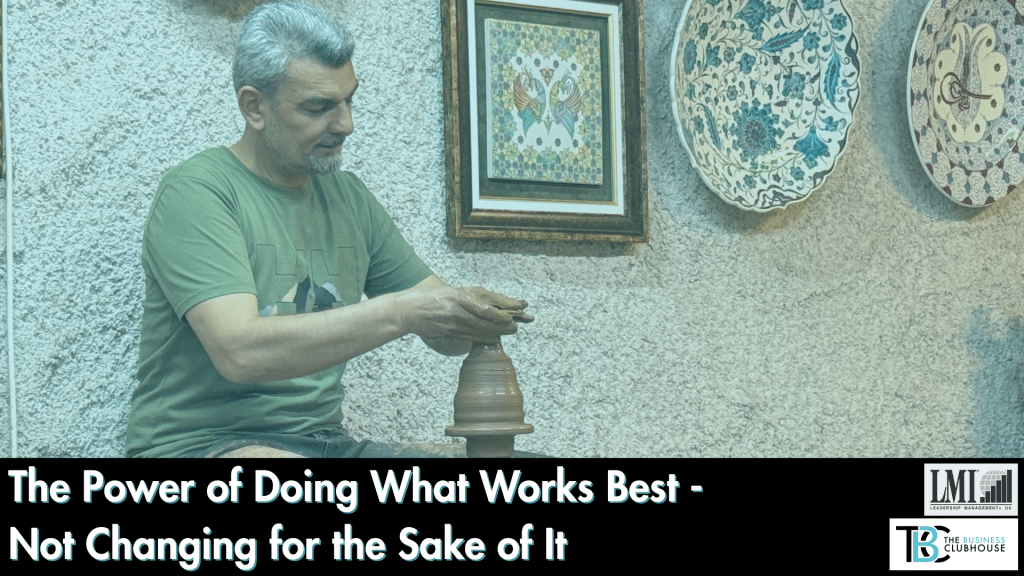
We visited a pottery factory that uses same techniques today as the Hittites did at least 4000 years ago. No fancy automation. No digital upgrades. Just the same methods, tools, and muscle memory passed down through generations.
Then there was the silk carpet factory. They rear their own silkworms and use processes first developed by the Chinese some 5000 y
ears ago. That’s 50 centuries of doing
things the same way…because it works. Not because they’re stuck in the past, but because the method stands the test of time. They’re not looking for a hack. They’re perfecting a craft.
And that got me thinking…
The Temptation of the New
I often get asked
-
“Can you create a bespoke programme just for us?”
-
“Can we have something different from everyone else?”
-
“Is there a shorter/faster/newer way to do this?”
Now, I get it – who doesn’t love something shiny and new? I was a kid in a sweet shop when my new phone arrived a few weeks ago!
But when it comes to learning that sticks and behaviour that actually changes, the methods that work best aren’t flashy or new. In fact, they’re often very, very old.
Proven Methods vs. Shiny Shortcuts
Take spaced repetition, for example. It’s a technique that underpins a lot of our leadership programmes. It helps people actually remember and apply what they’ve learned. First documented by Hermann Ebbinghaus in the 1880s (yep, over 140 years ago), it’s based on the idea that we forget things unless we revisit them regularly, and in the right way.
That was just when someone finally named it. Humans have probably been learning this way since we first began learning anything – possibly as far back as a million years ago.
The leadership programmes we use? The core approaches have been refined and used successfully for over 65 years. That’s six decades of real-world evidence.
So when someone asks for a completely “new” programme, or wants a shortcut to behaviour change, I’ll smile and think of those Turkish artisans, still using methods proven by time and results.
The Power of What Works
Here’s what I believe:
-
Innovation is great — but not at the expense of effectiveness.
-
Learning is a process, not an event.
-
And there’s nothing wrong with doing what works — even if it’s been working for centuries.
So, if you’re looking for something bespoke, I’d love to chat – drop me an email
But just know: different doesn’t always mean better.
Sometimes, the magic is in the method, not the novelty.